
Most people spend $5 on a manual toothbrush, use it for way too long, and wonder why their dentist keeps finding new problems. If you’ve been searching for the best electric toothbrush 2026, chances are you already know something needs to change — you just don’t want to waste money on a overhyped gadget that collects dust after a week.
After analyzing over 300,000 verified Amazon reviews across every major brand — Oral-B, Philips Sonicare, Aquasonic, and more – and cross-referencing what dental hygiene communities actually stand behind, we’ve done the hard work for you.
Whether you have a $20 budget or you’re ready to go full premium, this guide breaks down the only electric toothbrushes worth your money in 2026. And if you stick around to #3, you’ll find the one $29 pick that’s outselling nearly everything else on Amazon right now — and it’s ADA Accepted.
How We Picked the Best Electric Toothbrushes of 2026
Not every toothbrush with thousands of reviews deserves a spot on this list. Plenty of products game the rating system with bundled incentives and one-time buyers who never follow up. So before we get into the picks, here’s exactly how we filtered the noise.
Minimum Review Threshold
Every toothbrush on this list holds at least 4.4 stars with a minimum of 1,000 verified Amazon reviews. Most clear that bar by tens of thousands. That’s not a coincidence — it’s the baseline for a product that consistently delivers across different users, mouth types, and budgets.
What We Actually Looked At
Star ratings alone don’t tell the full story. We dug into the patterns inside the reviews — what buyers praised after 6 months of use, what broke down after 3, and which features people said they couldn’t live without once they tried them. Five criteria drove every decision:
- Plaque removal performance — does it actually clean better than a manual brush?
- Gum protection — pressure sensors, soft modes, and real-world sensitivity feedback
- Battery life — especially important for travelers and people who forget to charge
- Value per dollar — does the price match what you’re actually getting?
- Long-term reliability — are buyers still happy 6 to 12 months later?
Who This Guide Is For
First-time electric toothbrush buyers who don’t want to overspend. Long-time manual brush users finally making the switch. People upgrading from a basic buzzing brush to something that actually moves the needle. And yes — anyone whose dentist has been dropping hints at every single cleaning.
Whatever your budget, there’s a pick on this list built exactly for you.
Quick Comparison — Best Electric Toothbrushes at a Glance
Short on time? Here’s every pick on this list side by side. Find your budget row, lock in your winner, and jump straight to the full review below.
| # | Product | Best For | Price | Stars | Reviews |
|---|---|---|---|---|---|
| 1 | Aquasonic Black Series | Best Overall Value | Check Price | ⭐ 4.6 | 134,000+ |
| 2 | Oral-B Pro 1000 | Best Budget Workhorse | Check Price | ⭐ 4.6 | 78,000+ |
| 3 | Philips Sonicare 4100 | Best for Sensitive Gums | Check Price | ⭐ 4.4 | 21,000+ |
| 4 | Aquasonic Vibe Series | Best Style + Performance | Check Price | ⭐ 4.6 | 34,000+ |
| 5 | Oral-B iO3 | Best Step-Up from Basic | Check Price | ⭐ 4.4 | 17,600+ |
| 6 | Philips Sonicare 5100 | Best Mid-Range Sonicare | Check Price | ⭐ 4.6 | 27,900+ |
| 7 | Oral-B iO5 | Best Mid-Range Oral-B | Check Price | ⭐ 4.5 | 4,000+ |
| 8 | Philips Sonicare 5300 | Best for Heavy Plaque | Check Price | ⭐ 4.5 | 20,900+ |
| 9 | SURI 2.0 | Best for Eco Travelers | Check Price | ⭐ 4.6 | 1,800+ |
| 10 | Aquasonic Icon | Best Ultra-Budget Pick | Check Price | ⭐ 4.4 | 3,800+ |
| 11 | Philips DiamondClean 9500 | Best Premium Pick | Check Price | ⭐ 4.3 | 1,300+ |
| 12 | Onlyone Sonic | Best Wildcard Budget Pick | Check Price | ⭐ 4.4 | 1,000+ |
Aquasonic Black Series Ultra-Whitening Electric Toothbrush
- Sonic motor: 40,000 VPM
- Cleaning modes: 4
- Brush heads included: 8
- Charging: Wireless
- ADA Accepted: ✅
- Sustainability features: 3
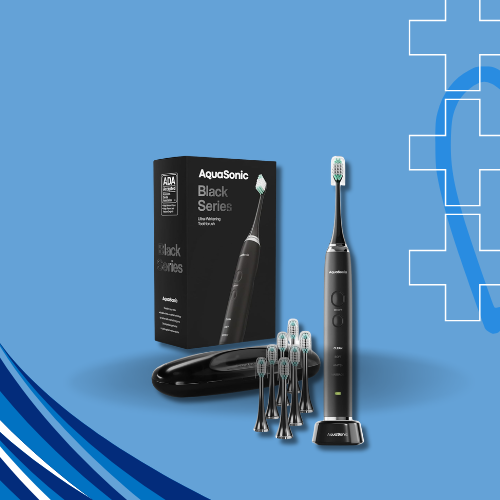
If you’ve been putting off switching to an electric toothbrush because of the price, the Aquasonic Black Series is the pick that removes every excuse. This is a whitening electric toothbrush that punches so far above its price tag that it has quietly become one of the best-selling oral care products on Amazon — with over 40,000 units moving every single month.
That’s not a flash sale number. That’s consistent, month-over-month trust from real buyers.
What It Actually Does
The Black Series runs on a sonic motor that delivers 40,000 vibrations per minute — the same technology you’ll find in brushes costing three to four times more. It’s ADA Accepted, which means the American Dental Association has independently verified it is both safe and effective. That’s not a marketing badge. That actually means something.
Four cleaning modes let you switch between whitening, massage, sensitive, and normal brushing depending on what your mouth needs that day. The built-in smart timer pulses every 30 seconds to guide you through each quadrant — the same two-minute routine your dentist has been asking you to follow for years.
Who Should Buy This
This is the perfect first electric toothbrush. If you’ve never made the switch from manual, this is where you start — not because it’s cheap, but because it genuinely delivers results that will make you wonder why you waited. Buyers consistently report whiter teeth within the first two weeks and noticeably cleaner feeling after every brush.
With 134,000+ reviews at 4.6 stars, it’s also Amazon’s most-reviewed electric toothbrush in this price range by a wide margin.
Who Should Skip This
If you have advanced gum disease or your dentist has specifically recommended a pressure sensor, step up to the Philips Sonicare 4100 at #3. The Black Series doesn’t include a pressure warning — a small gap at this price point but worth knowing.
Oral-B Pro 1000 Rechargeable Electric Toothbrush
- Cleaning technology: Rotating-oscillating (CrossAction)
- Cleaning modes: 1 (Daily Clean)
- Pressure sensor: ✅
- Timer: 2-minute with 30-second quad-pacer
- Charging: Standard inductive base
- Available colors: Black / White / Pink
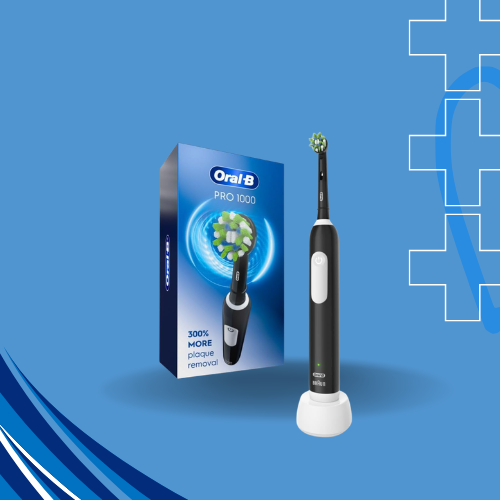
There’s a reason the Oral-B Pro 1000 has been the most dentist-recommended electric toothbrush for years running. This isn’t a trendy pick that blew up overnight — it’s a rechargeable electric toothbrush that has quietly sat in more bathrooms, been handed out in more dentist offices, and earned more long-term loyalty than almost any other brush on the market.
Over 20,000 units sold every single month on Amazon alone. At 78,000+ reviews and 4.6 stars, the data is about as clean as the teeth it produces.
What It Actually Does
The Pro 1000 uses Oral-B’s signature CrossAction brush head — a round rotating-oscillating design that wraps around each individual tooth and removes up to 300% more plaque along the gumline than a regular manual toothbrush. That’s not a marketing claim. That’s the number behind why dentists keep recommending this specific model year after year.
The built-in pressure sensor is one of the most important features at this price point. It alerts you the moment you’re brushing too hard — a habit that causes more gum recession and enamel wear than most people realize. For anyone who has ever been told by their dentist to “ease up,” this single feature alone is worth the upgrade.
A two-minute timer keeps your routine on track with the quad-pacer pulsing every 30 seconds — simple, effective, and exactly what your mouth needs.
Who Should Buy This
This is the no-nonsense choice. If you want a brush that your dentist would genuinely approve of, that won’t confuse you with five different modes, and that will simply make your teeth cleaner every single day — the Pro 1000 is exactly that. First-time switchers and long-time manual brush users both land here comfortably.
It’s also worth noting that Oral-B replacement brush heads are widely available everywhere — pharmacies, grocery stores, Amazon subscriptions — which matters more than people realize when they’re 6 months in and need a refill.
Who Should Skip This
If you want sonic technology specifically, or you’re looking for multiple cleaning modes and a more modern feel, jump to the Philips Sonicare 4100 at #3 or step up to the Oral-B iO3 at #5. The Pro 1000 is deliberately simple — and for some buyers, that simplicity is exactly the point. For others, it might feel limiting over time.
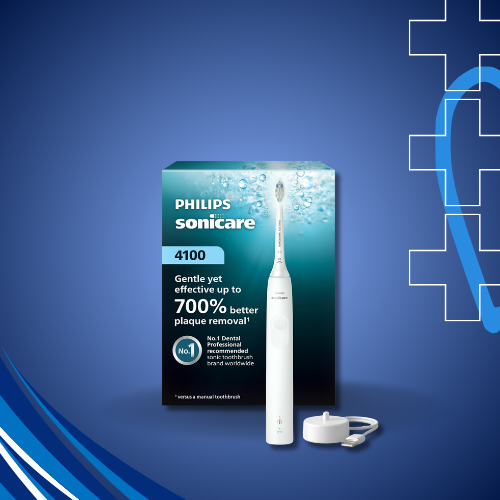
Philips Sonicare 4100 Series Electric Toothbrush
- Cleaning technology: Advanced sonic vibration
- Cleaning modes: 1
- Intensity settings: 2
- Pressure sensor: ✅
- Timer: Smartimer + Quadpacer
- Charging: Inductive base
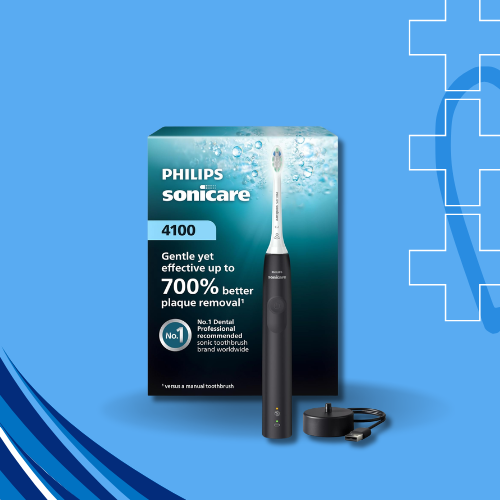
If the Oral-B Pro 1000 is the dentist’s workhorse, the Philips Sonicare 4100 is the dentist’s recommendation for everyone who winces during cleanings. This is a sonic toothbrush built specifically around gum health — and at $39.96, it’s one of the most accessible entry points into Philips’ legendary Sonicare technology.
Amazon’s Choice. 20,000+ units sold every single month. The gum-sensitive community has voted with their wallets — loudly.
What It Actually Does
Where Oral-B uses a rotating-oscillating motion, the Sonicare 4100 works differently. Its advanced sonic technology drives fluid between teeth and along the gumline through high-frequency vibrations — a gentler, more sweeping action that’s significantly less aggressive on sensitive tissue. For anyone dealing with gum recession, post-treatment sensitivity, or just a mouth that bleeds during brushing, that difference is felt immediately.
Two intensity settings let you start low and work your way up as your gums adjust — something first-time electric brush users genuinely appreciate in the first two weeks. The pressure sensor adds a critical safety net, alerting you before you cause damage without even realizing it. The Smartimer ensures you hit the full two minutes every session. The Quadpacer pulses every 30 seconds so you never neglect a single corner of your mouth
Who Should Buy This
Anyone with sensitive gums, a history of gum disease, or a dentist who keeps flagging inflammation at every visit. Also perfect for people making the switch from manual who want a gentler introduction to electric brushing. The two intensity settings make the learning curve almost nonexistent.
Who Should Skip This
If your gums are healthy and you’re chasing whitening results or multiple cleaning modes, the Aquasonic Black Series at #1 gives you more features for less money. If you want a full Sonicare upgrade with more modes and longer battery life, step up to the ProtectiveClean 5100 at #6.
Aquasonic Vibe Series Ultra-Whitening Toothbrush
- Sonic motor: 40,000 VPM
- Cleaning modes: 4
- Brush heads included: 8
- Charging: Wireless
- ADA Accepted: ✅
- Sustainability features: 3
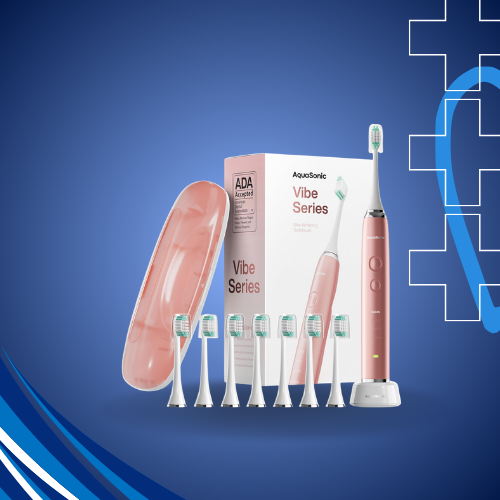
Most electric toothbrushes look like medical equipment. The Aquasonic Vibe Series looks like it belongs on a designer bathroom shelf — and somehow still delivers a 40,000 VPM ultra-whitening toothbrush performance that puts brushes twice its price to shame.
34,000+ reviews at 4.6 stars. That’s not a style pick that sacrifices substance. That’s both.
What It Actually Does
The Vibe Series runs the same 40,000 vibrations per minute sonic motor as the Black Series — but wraps it in a sleeker, fashion-forward design available in multiple colorways including the fan-favorite Satin Rose Gold. Four cleaning modes cover whitening, massage, sensitive, and normal brushing. The wireless charging base keeps your counter clean and cable-free. ADA Accepted means the cleaning performance is independently verified — not just aesthetically pleasing.
The 8 included brush heads give you nearly a full year of replacements right out of the box, which is genuinely one of the best value propositions in this entire guide.
Who Should Buy This
Style-conscious buyers who refuse to compromise on cleaning power. Anyone who wants the same Aquasonic sonic performance as the Black Series but with a brush that actually looks intentional sitting next to their skincare routine. Also a strong gifting pick — especially in Rose Gold.
Who Should Skip This
If aesthetics don’t matter to you and you just want maximum value, save $10 and go with the Aquasonic Black Series at #1. Same motor, same core performance, lower price.
Oral-B iO3 Rechargeable Electric Toothbrush
- Cleaning technology: iO rotating-oscillating
- Cleaning modes: 3 (Daily Clean / Sensitive / Whitening)
- Pressure sensor: Visual color-coded ring ✅
- Timer: 2-minute with quad-pacer
- Charging: Magnetic
- Travel case: ✅
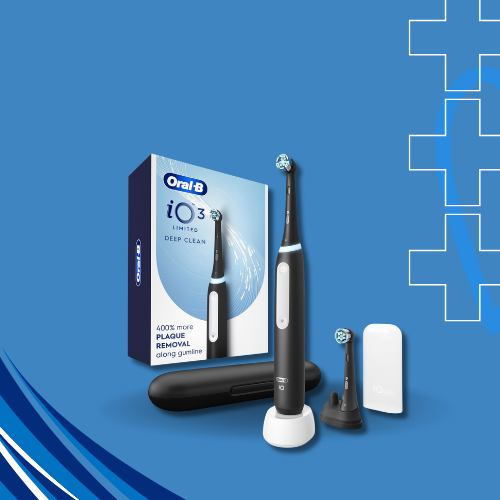
The Oral-B iO3 is where Oral-B’s next-generation iO technology becomes accessible without the full premium price tag. This is a rechargeable electric toothbrush with a visual pressure sensor — a feature that usually sits behind a $200+ price wall — and it brings it down to just over a hundred dollars.
17,600+ reviews at 4.4 stars with 4,000+ units moving monthly. Buyers know an upgrade when they feel one.
What It Actually Does
The iO3 keeps the same rotating-oscillating DNA that made the Pro 1000 famous but adds Oral-B’s newer iO motor — a quieter, smoother, more refined brushing experience that long-time Oral-B users immediately notice. Three cleaning modes give you Daily Clean, Sensitive, and Whitening — enough variety without overwhelming you with options you’ll never use.
The visual pressure sensor is the standout feature here. A color-coded light ring shifts from green to white to red in real time depending on how hard you’re pressing — far more intuitive than a simple vibration alert. It’s the kind of feedback that genuinely changes brushing habits over time.
The iO3 also comes with a travel case and 2 brush heads right out of the box — a notable step up from the Pro 1000’s single-head package.
Who Should Buy This
Pro 1000 owners ready for their first real upgrade. People who brush too hard and need visual feedback to break the habit. Anyone who wants Oral-B’s premium iO feel without committing to the iO5 or iO9 price points.
Who Should Skip This
If the pressure sensor isn’t a priority and you’re happy with one cleaning mode, save $60 and stay with the Pro 1000 at #2. If you’re already stretching to $109, consider going a little further to the iO5 at #7 for two additional cleaning modes and a better long-term experience.
Philips Sonicare ProtectiveClean 5100
- Cleaning technology: Advanced sonic vibration
- Cleaning modes: 3 (Clean / White / Gum Care)
- Pressure sensor: ✅
- Battery life: 14 days
- Timer: Smartimer + Quadpacer
- Travel case: ✅
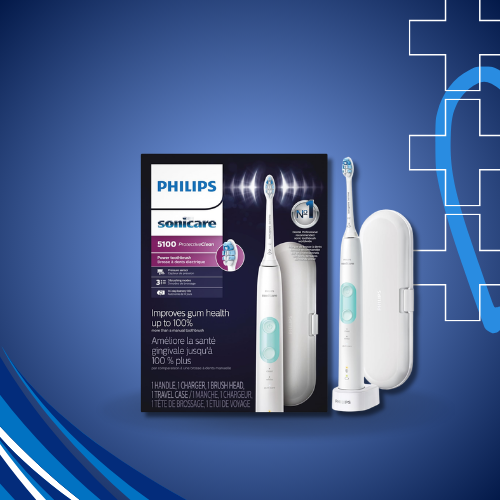
The Philips Sonicare ProtectiveClean 5100 is the answer to the most common electric toothbrush question on the internet — “what’s the best Sonicare that isn’t $200?” This is a rechargeable sonic toothbrush with a 14-day battery life that makes it the most practical mid-range pick for anyone who travels frequently or simply forgets to charge things.
27,900+ reviews at 4.6 stars — the highest-rated Sonicare on this entire list.
What It Actually Does
The 5100 builds on everything that makes the 4100 great and layers in three cleaning modes — Clean, White, and Gum Care — giving you meaningful versatility without the complexity of higher-end models. The Gum Care mode specifically is the reason this brush earns its ProtectiveClean name — it uses a gentle massage action along the gumline that goes beyond what the 4100 can offer.
The pressure sensor carries over from the 4100 but feels more refined here. The 14-day battery is the real differentiator in this price tier — charge it once, forget about it for two weeks, and keep brushing. For anyone who travels regularly, that’s not a nice-to-have. That’s a deciding factor.
Smartimer and Quadpacer keep your two-minute routine locked in with 30-second quadrant reminders every single session.
Who Should Buy This
Sonicare loyalists who’ve outgrown the 4100 and want more cleaning modes without jumping to $150+. Frequent travelers who need reliable battery life. Anyone whose dentist has flagged both gum health and whitening as priorities — the 5100 covers both in one brush.
Who Should Skip This
If gum sensitivity is your only concern and budget matters, the Sonicare 4100 at #3 handles that job for $39 less. If you want even more cleaning power and don’t mind spending more, the ProtectiveClean 5300 at #8 adds bonus brush heads for just $30 more.
Oral-B iO5 Deep Clean & Whiten Electric Toothbrush
- Cleaning technology: iO rotating-oscillating
- Cleaning modes: 5 (Daily Clean / Whitening / Sensitive / Gum Care / Intense)
- Pressure sensor: Visual color-coded ring ✅
- Timer: 2-minute with quad-pacer
- Charging: Magnetic
- Travel case: ✅
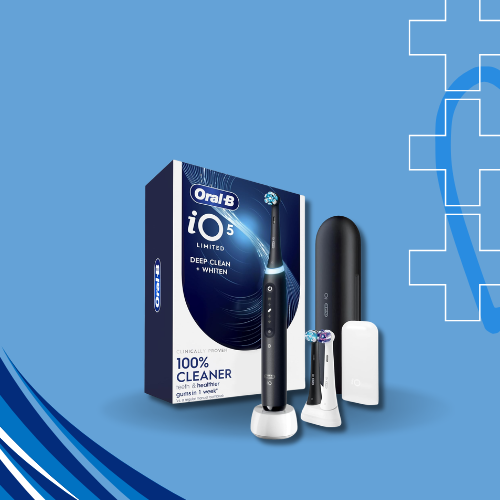
The Oral-B iO5 is the first model in the iO lineup where the full iO experience clicks into place. Five cleaning modes, three brush heads in the box, and a deep clean and whitening electric toothbrush performance that Amazon reviewers consistently describe as a visible difference within the first month.
4,000+ reviews at 4.5 stars with 3,000+ units selling monthly — and that number is climbing.
Who Should Buy This
Serious about whitening without professional treatments. Anyone stepping up from the iO3 who wants the full iO lineup experience. People who want one brush that genuinely covers every scenario — from post-surgery sensitivity to pre-dentist deep cleaning.
Who Should Skip This
If you’re primarily focused on gum health over whitening, the Sonicare 5100 at #6 delivers comparable results for $70 less. If budget isn’t a concern and you want the absolute best Oral-B has to offer, skip past this and look at the iO9.
Philips Sonicare ProtectiveClean 5300
- Cleaning technology: Advanced sonic vibration
- Cleaning modes: 3 (Clean / White / Gum Care)
- Pressure sensor: ✅
- Timer: Smartimer + Quadpacer
- Bonus brush heads: 2 ✅
- Travel case: ✅
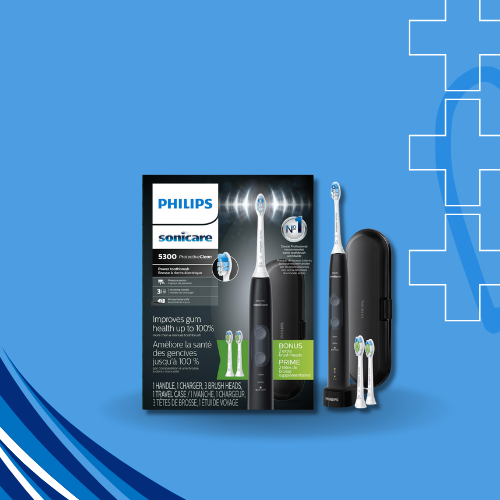
The Philips Sonicare ProtectiveClean 5300 is the 5100’s more aggressive sibling — built for people whose dentist has been flagging heavy tartar and plaque buildup at every single visit. This is a rechargeable sonic toothbrush that targets the gumline more deliberately than any other brush in this price range.
20,900+ reviews at 4.5 stars. Quietly one of the most trusted Sonicare models in the entire lineup.
What It Actually Does
The 5300 runs the same three cleaning modes as the 5100 — Clean, White, and Gum Care — but the Gum Care mode here feels more targeted, with a brushing action specifically calibrated for people dealing with inflammation, early-stage gingivitis, or consistently high plaque scores at cleanings.
The pressure sensor is present and refined. The Smartimer and Quadpacer keep your routine structured. Where the 5300 genuinely pulls ahead of the 5100 is in the box — two bonus brush heads are included, giving you a significant headstart on replacements and better long-term value per dollar at the slightly higher price point.
Who Should Buy This
Anyone whose dentist consistently mentions plaque, tartar, or gingivitis. People who want the 5100 experience but with better out-of-box value thanks to the bonus brush heads. A strong choice for couples sharing one charger but using separate heads.
Who Should Skip This
If heavy plaque isn’t your primary concern and you’re choosing between this and the 5100, save $30 and go with the 5100 — the core brushing performance is nearly identical. If you want app connectivity and advanced tracking, jump to the DiamondClean 9500 at #10.
SURI 2.0 Sonic Electric Toothbrush
- Cleaning technology: Sonic vibration
- Pressure sensor: ✅
- Battery life: 1 month+
- Travel case: UV-sanitizing ✅
- Sustainable design: ✅
- Color options: Green + others
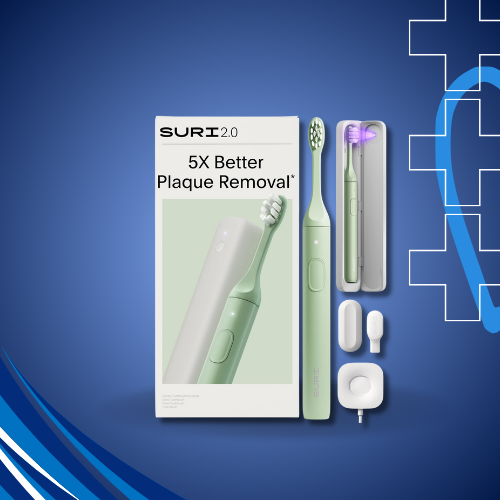
The SURI 2.0 is unlike anything else on this list — and that’s entirely the point. This is a sonic electric toothbrush for adults with a UV-cleaning travel case that sanitizes your brush head while you’re on the road. In a category dominated by Oral-B and Philips, SURI carved out a fiercely loyal niche by solving a problem nobody else bothered to address — what happens to your brush head inside a closed travel case for 10 days?
1,892 reviews at 4.6 stars. Small numbers compared to the giants on this list — but the loyalty per buyer is off the charts.
What It Actually Does
The UV travel case isn’t a gimmick. It uses ultraviolet light to eliminate bacteria that accumulate on brush heads between uses — something every traveler should be thinking about but almost nobody does. Combined with a 1-month+ battery life, the SURI 2.0 is engineered specifically for people who live out of a suitcase and refuse to compromise on their oral hygiene routine while doing it.
The pressure sensor keeps your gum health protected session to session. The sonic motor delivers strong cleaning performance across all brush modes. The sustainable design — SURI’s entire brand ethos — means the materials and packaging reflect a genuine commitment to reducing plastic waste, not just a green label slapped on a standard product.
Who Should Buy This
Frequent travelers, eco-conscious buyers, and anyone who has ever thought “I wonder how many germs are on my brush head right now.” Also a premium gifting pick for the person who has everything but genuinely cares about sustainability.
Who Should Skip This
If you rarely travel and sustainability isn’t a priority, the SURI 2.0’s premium price is harder to justify against the Sonicare 5100 at #6 or the Oral-B iO5 at #7, both of which deliver comparable daily brushing performance for less. You’re paying for the travel case ecosystem here — and it’s worth it if that matters to you.
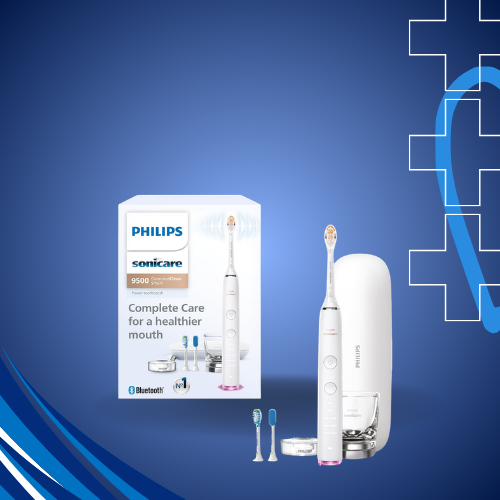
Philips Sonicare DiamondClean Smart 9500
- Cleaning technology: Advanced sonic vibration
- Cleaning modes: 5
- Intensity levels: 3
- Total brushing settings: 15
- Pressure sensor: ✅
- Brush head detection: ✅
- App connectivity: ✅
- USB travel case: ✅
- Sustainability features: 1
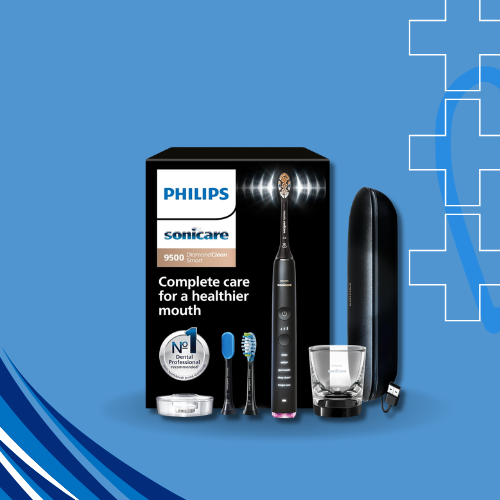
If every other brush on this list is a great daily driver, the Philips Sonicare DiamondClean Smart 9500 is the full technology platform. This is a premium sonic toothbrush with app connectivity and brush head detection — a system that literally identifies which brush head you’ve attached and automatically adjusts its settings to match. No other brush in this guide does that.
1,336 reviews at 4.3 stars — a smaller crowd, but these are high-intent buyers who researched carefully and made a deliberate choice.
What It Actually Does
The DiamondClean 9500 gives you five brushing modes and three intensity levels — 15 total brushing combinations — all accessible through the brush itself or fine-tuned through the Philips Sonicare app. The app tracks your brushing coverage in real time, flags the spots you consistently miss, and gives you actionable feedback between dental visits in a way that no other brush at home can replicate.
Brush head detection is the headline feature — snap in a Gum Health head and the brush shifts into gum care mode automatically. Switch to a Whitening head and it recalibrates for that. It’s the kind of seamless intelligence that makes $250 feel justified for the right buyer.
The USB charging travel case means one less adapter in your bag. The pressure sensor, replacement reminder, and app integration round out a package that is genuinely the most complete home oral care tool available at this price point.
Who Should Buy This
Tech-forward buyers who want dentist-level data at home. People who have been told repeatedly that their brushing technique needs work and want real feedback to fix it. Anyone investing in their oral health long-term who sees $250 as preventive care rather than a luxury purchase.
Who Should Skip This
If app connectivity and brush head detection don’t excite you, the Sonicare 5100 at #6 delivers 80% of the core cleaning performance for $170 less. The DiamondClean 9500 is for buyers who will actively use every feature — if that’s not you, the premium is wasted.
Onlyone Sonic Electric Toothbrush — Best Wildcard Budget Pick
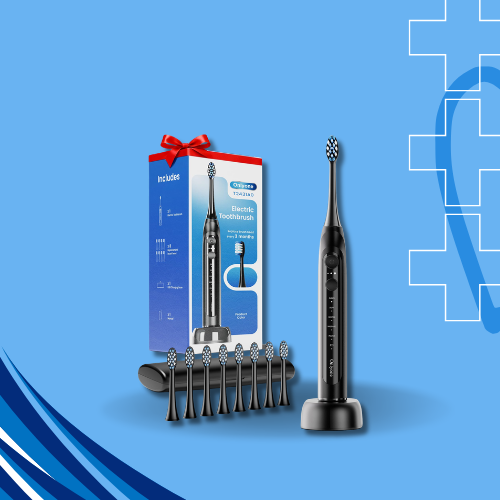
For under $25, the Onlyone Sonic delivers a spec sheet that genuinely embarrasses brushes at double the price. Five cleaning modes, wireless charging, a smart timer, and 8 brush heads included out of the box — all for less than a dinner out. It’s a newer brand with a smaller review base, but 10,000+ units selling monthly tells you the word is spreading fast. If you want maximum accessories per dollar and don’t need a household name on the handle, this is your pick.
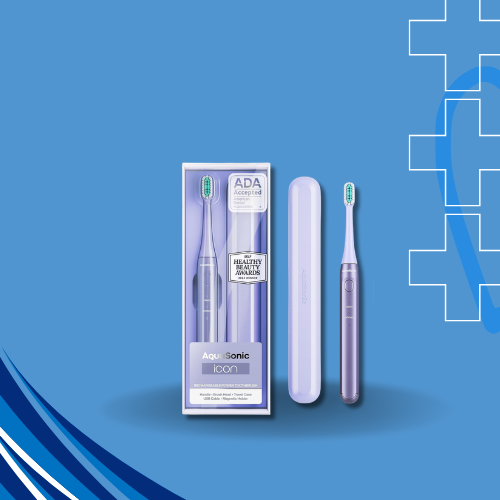
Aquasonic Icon ADA-Accepted Rechargeable Toothbrush — Best Ultra-Budget Pick
The Aquasonic Icon is the answer to “what’s the absolute cheapest electric toothbrush that actually works?” At $19.95 with ADA Acceptance, it removes every excuse for not making the switch from manual. Two brushing modes, a smart timer, and a genuinely clever magnetic wall holder make this feel far more considered than its price suggests. Best for students, teens, or anyone buying their very first rechargeable toothbrush.
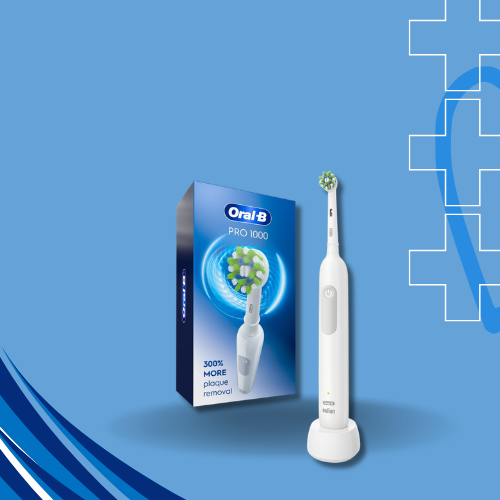
Oral-B Pro 1000 Rechargeable Electric Toothbrush — White
Identical performance to the Black version at #2 — same CrossAction brush head, same pressure sensor, same two-minute timer. The White colorway is the classic bathroom staple and consistently one of Oral-B’s top-selling variants. If you prefer a cleaner, minimal look on your countertop, this is the one. Everything else is exactly the same workhorse you’d expect from the Pro 1000 lineup.
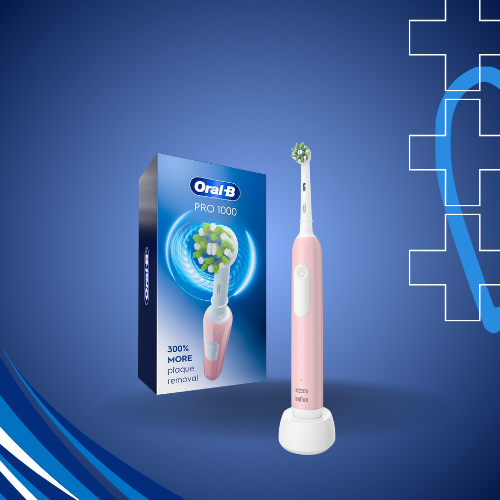
Oral-B Pro 1000 Rechargeable Electric Toothbrush — Pink
Same Pro 1000 DNA — CrossAction head, pressure sensor, quad-pacer timer — in a Pink finish that has built its own loyal following with 10,000+ units selling monthly. Amazon’s Choice in its color category. A popular gifting pick and a strong choice for anyone who wants the full Pro 1000 performance with a little more personality. Functionally identical to the Black and White versions.
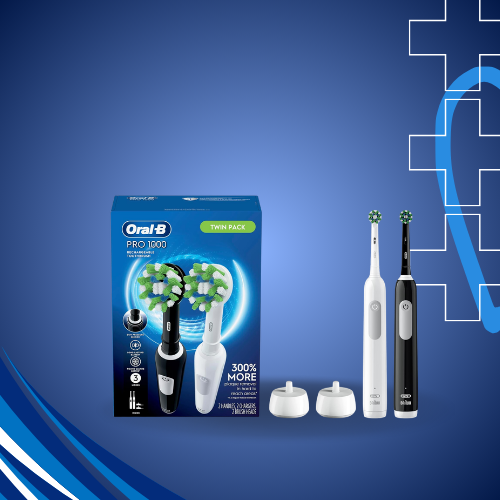
Oral-B Pro 1000 CrossAction Electric Toothbrush — Black and White 2-Pack
Two Pro 1000 brushes for $75 — that’s $37.51 per brush, which is the best per-unit price on any Oral-B in this guide. The obvious buy for couples or households sharing one charger with separate brush heads. You get the full Pro 1000 experience twice over at a price that makes buying two individually feel wasteful. If there are two people in your bathroom, this is the smarter order.
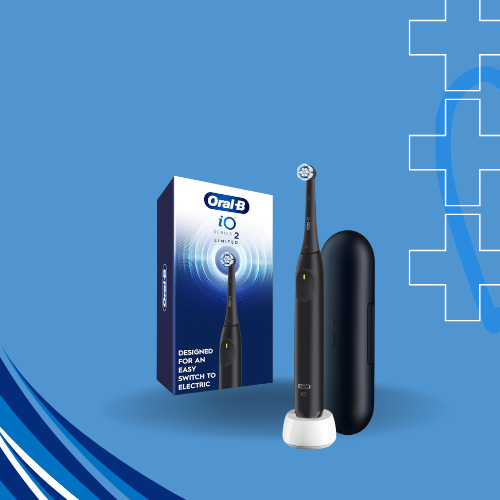
Oral-B iO Limited Simple Clean Electric Toothbrush — Night Black
The iO Limited Simple Clean sits in an interesting gap — iO technology and automatic pressure sensor at a lower entry price than the full iO3. Three cleaning modes keep things straightforward without overwhelming first-time iO buyers. The Night Black finish gives it a premium feel that punches above its price point. A solid option if you want a taste of Oral-B’s iO lineup without fully committing to the iO3 price tag.
Philips Sonicare 4100 Series Electric Toothbrush — White
The White version of the Sonicare 4100 carries the same advanced sonic technology, pressure sensor, Smartimer, and Quadpacer as the Black model at #3. The slightly lower rating reflects a larger, older review base rather than any performance difference. Amazon’s Choice with 20,000+ units sold monthly — the White colorway is the classic Sonicare look that has been sitting on bathroom counters for decades. Same brush, different finish.
Philips Sonicare DiamondClean Smart 9500 — White
The White version of the DiamondClean 9500 at #10 — identical brush head detection, app connectivity, 15 brushing settings, USB travel case, and pressure sensor in a classic White finish. The choice between Black and White here is purely aesthetic. If the full DiamondClean 9500 feature set appeals to you but you prefer a lighter colorway on your bathroom shelf, this is exactly the same premium investment in a different coat.
Oscillating vs. Sonic Technology — Which Cleans Better?
It’s the most debated question in the electric toothbrush world — and the answer isn’t as straightforward as either brand’s marketing team wants you to believe. Whether you land on an Oral-B or a Philips Sonicare ultimately comes down to one thing: how your mouth actually responds to each technology.
Here’s what the difference actually means in practice.
How Oscillating-Rotating Technology Works (Oral-B)
Oral-B’s signature technology moves the brush head in a small circular motion — rotating in one direction, then the other, while simultaneously pulsing back and forth against the tooth surface. The round brush head is designed to cup each individual tooth and physically sweep plaque away from the enamel and gumline.
Think of it as a precise, targeted scrubbing action — tooth by tooth, surface by surface.
Who it works best for:
- People who have always been told by their dentist that they miss specific spots
- Anyone who wants a more manual-feeling brush with powered assistance
- Buyers who prefer a compact brush head that fits easily into tighter spaces
How Sonic Technology Works (Philips, Aquasonic, SURI)
Sonic toothbrushes work completely differently. Instead of a rotating motion, they use high-frequency vibrations — anywhere from 31,000 to 40,000 strokes per minute — to create a fluid dynamic cleaning action. Those vibrations drive toothpaste and saliva between teeth and along the gumline, reaching areas the bristles never physically touch.
Think of it as a sweeping, whole-mouth cleaning action rather than a tooth-by-tooth approach.
Who it works best for:
- People with sensitive gums who find rotating brushes too aggressive
- Anyone with crowns, veneers, or dental work who needs a gentler motion
- Buyers who want maximum coverage with minimal manual technique required
What the Research Actually Says
Clinical studies consistently show that both technologies outperform manual brushing by a significant margin — that part isn’t up for debate. The honest answer is that the difference between oscillating and sonic in real-world plaque removal is marginal when used correctly and consistently.
What matters far more than the technology is this:
- Are you brushing for the full two minutes?
- Are you covering all four quadrants evenly?
- Are you replacing your brush head every three months?
A $30 sonic toothbrush used correctly every day will outperform a $250 oscillating brush used lazily. The technology is the foundation — your habits are the building.
Quick Comparison
| # | Oral-B (Oscillating) | Philips/Aquasonic (Sonic) |
|---|---|---|
| Motion | Rotating + pulsing | High-frequency vibration |
| Best for | Targeted cleaning, plaque removal | Sensitive gums, full coverage |
| Feeling | More intense, scrubbing | Gentler, sweeping |
| Brush head size | Compact, round | Standard, oval |
| Noise level | Moderate | Slightly louder at high speeds |
| Top pick on this list | Oral-B Pro 1000 (#2) | Philips Sonicare 4100 (#3) |
The bottom line: If you have healthy gums and want aggressive plaque removal, go oscillating with the Oral-B Pro 1000 at #2. If your gums are sensitive or you’re coming off a period of dental neglect, go sonic with the Philips Sonicare 4100 at #3. Both will make your dentist happier than any manual toothbrush ever did.
Electric vs. Manual Toothbrush — Is the Upgrade Actually Worth It?
Let’s settle this once and for all. If you’ve been on the fence about making the switch from a manual toothbrush, here’s the honest, no-fluff answer — and the clinical research backs every word of it.
Yes. The upgrade is worth it. Here’s exactly why.
What a Manual Toothbrush Actually Does
A manual toothbrush relies entirely on your technique — the angle, the pressure, the duration, and the consistency. When everything lines up perfectly, a manual brush can do a decent job. The problem is that almost nobody brushes perfectly, every time, for the full two minutes, at the correct 45-degree angle, with the right pressure.
Most people brush for 45 seconds. Most people press too hard. Most people miss the same spots every single day without ever realizing it.
What an Electric Toothbrush Does Differently
An electric toothbrush removes the technique variable. The motor does the cleaning motion for you — whether that’s oscillating, rotating, or sonic vibration. Your job is simply to guide it along the surfaces and let the technology work.
The clinical numbers are hard to argue with:
- Electric toothbrushes remove up to 21% more plaque than manual brushing over a 3-month period
- They reduce gingivitis by up to 11% more than manual brushes in the same timeframe
- Built-in timers mean users brush for the full two minutes at a rate significantly higher than manual brush users
These aren’t numbers from toothbrush brand marketing teams. These come from independent clinical reviews published in dental research journals — the same sources your dentist reads.
The Real-World Difference People Notice
Beyond the clinical data, the real-world feedback from hundreds of thousands of Amazon buyers tells a consistent story:
- Fewer cavities flagged at annual checkups
- Shorter, easier professional cleanings
- Noticeably whiter teeth within the first 2 to 4 weeks
- Gums that stop bleeding during brushing — often within the first month
The most common thing buyers report after switching? Their dentist notices before they do.
When a Manual Toothbrush Is Fine
To be fair — a manual toothbrush used with perfect technique, for the full two minutes, twice a day, with proper flossing is genuinely effective. Dentists acknowledge this. If you are that disciplined and your dental checkups are consistently clean, the upgrade is a convenience and a performance boost — not a necessity.
For everyone else — which is most people — the electric toothbrush closes the gap between how you think you’re brushing and how you’re actually brushing.
Cost Breakdown — Is It Really More Expensive?
| # | Manual Toothbrush | Electric Toothbrush |
|---|---|---|
| Upfront cost | $3 – $8 | $20 – $250 |
| Replacement cost | Every 3 months ($3–$8) | Brush heads every 3 months ($5–$15) |
| Annual cost | $12 – $32 | $40 – $100 (year one) / $20–$60 (ongoing) |
| Average cavity cost saved | # | $150–$300 per filling avoided |
The switch from manual to electric is one of the highest-return upgrades in your daily routine. The Aquasonic Icon at #10 costs $19.95 — less than most people spend on coffee in a week. There is no longer a price argument for staying on manual.
What to Look for Before Buying an Electric Toothbrush in 2026
The electric toothbrush market in 2026 is more crowded than ever. More modes, more features, more buzzwords on the packaging. Here’s how to cut through the noise and find the brush that actually fits your mouth, your habits, and your budget.
1. Pressure Sensor — Non-Negotiable for Gum Health
If there is one feature worth prioritizing above all others, it’s a pressure sensor. Brushing too hard is one of the leading causes of gum recession and enamel erosion — damage that is permanent and expensive to address. A pressure sensor alerts you the moment you exceed safe brushing force, breaking a habit most people don’t even know they have.
Every brush on this list that includes a pressure sensor is marked clearly. If gum health is any kind of concern, don’t buy without one.
2. Cleaning Modes — How Many Do You Actually Need?
Marketing teams love stacking up cleaning modes as a selling point. The honest truth is that most people use exactly one mode — the default daily clean — and never touch the rest.
That said, having a Sensitive mode is genuinely useful when your gums need a break. A Whitening mode used consistently before dental appointments makes a real difference. A Gum Care mode is valuable if your dentist has flagged inflammation.
Our recommendation: don’t pay a premium for 10 modes if you’ll realistically use 2. Three well-executed modes beat ten mediocre ones every time.
3. Sonic vs. Oscillating Technology
Already covered in depth above — but the short version: oscillating for targeted plaque removal, sonic for sensitive gums and broader coverage. Neither is objectively superior. Both are dramatically better than manual.
4. Battery Life and Charging Type
- Under 1 week: Fine for home use if you charge habitually
- 2 weeks: The sweet spot for most users — the Sonicare 5100 at #6 hits this perfectly
- 1 month+: Best for frequent travelers — the SURI 2.0 at #9 leads here
Charging types range from standard inductive bases to magnetic charging to wireless pads to USB-C travel cases. None is dramatically better than another for daily use — but USB-C or wireless matters enormously when you’re packing for a trip and don’t want an extra adapter.
5. Brush Head Availability and Replacement Cost
This is the hidden long-term cost most buyers overlook. A brush head should be replaced every 3 months — that’s 4 replacements per year. Before committing to any electric toothbrush, check:
- Are replacement heads available at your local pharmacy?
- What do they cost per head?
- Are compatible third-party heads available?
Oral-B and Philips Sonicare have the widest replacement head availability globally. Aquasonic heads are widely available on Amazon. Newer brands like SURI have their own head ecosystem — reliable, but worth checking availability in your region.
6. ADA Acceptance — What It Actually Means
The ADA Accepted seal means the American Dental Association has independently evaluated the product and verified that its safety and efficacy claims are supported by scientific evidence. It is not a paid endorsement. It is not automatic. Brands apply, submit clinical data, and either earn it or don’t.
Every ADA Accepted brush on this list earned that designation through independent verification — and it is a meaningful differentiator, especially in the budget and mid-range tiers where marketing claims are hardest to verify.
Budget Tier Guide
| Budget | Best Pick | Why |
|---|---|---|
| Under $25 | Aquasonic Icon (#10) | ADA Accepted, gets the job done |
| $25 – $50 | Aquasonic Black Series (#1) or Oral-B Pro 1000 (#2) | Best overall value in the entire guide |
| $50 – $80 | Philips Sonicare 4100 (#3) or Sonicare 5100 (#6) | Pressure sensor, proven technology |
| $80 – $150 | Oral-B iO3 (#5) or iO5 (#7) | Smart features, refined iO experience |
| $150+ | SURI 2.0 (#9) or DiamondClean 9500 (#10) | Premium features, app connectivity |
FAQ — Most Asked Electric Toothbrush Questions in 2026
Is a $30 electric toothbrush as good as a $200 one?
For core plaque removal — largely yes. The Aquasonic Black Series at $29.95 uses the same 40,000 VPM sonic technology found in brushes costing five times more. What you gain at higher price points is smarter features — app connectivity, brush head detection, more cleaning modes, and refined pressure feedback. If those features matter to you, the premium is justified. If they don’t, the $30 brush will keep your teeth just as clean.
What electric toothbrush do dentists actually recommend in 2026?
Dentists most commonly recommend Oral-B and Philips Sonicare as brands — specifically because of their long clinical track records and the availability of ADA Accepted models. The Oral-B Pro 1000 is cited most frequently in the budget tier. The Philips Sonicare 4100 is the most common recommendation for patients with gum sensitivity. At the premium end, the Philips DiamondClean 9500’s app-based feedback is increasingly praised by dental professionals for the at-home data it provides.
Oral-B vs Philips Sonicare — which is better?
Neither is objectively better — they use fundamentally different technology designed for different needs. Oral-B’s oscillating-rotating motion is more aggressive and targeted, making it excellent for heavy plaque removal. Philips Sonicare’s sonic vibration is gentler and broader, making it the stronger choice for sensitive gums and larger coverage areas. The best one is the one that matches your specific mouth. If you’re unsure, ask your dentist which technology they’d recommend based on your last cleaning notes.
How often should you replace your electric toothbrush head?
Every three months — or sooner if the bristles visibly fray. Most dentists recommend replacing at the same time you change your smoke detector batteries: pick a seasonal cue and stick to it. Worn bristles lose up to 30% of their cleaning effectiveness, which means you’re paying for an electric toothbrush and getting manual toothbrush results. Most brushes on this list come with 2 to 8 heads included — use that as your replacement runway and set a calendar reminder.
Are ADA-accepted toothbrushes actually better?
The ADA seal means independently verified safety and efficacy — not just a marketing claim. It doesn’t automatically mean superior to non-ADA-accepted brushes, but it does mean the cleaning and safety claims on the packaging have been validated by a third party with no financial stake in the product. In a market full of inflated claims, the ADA seal is one of the most reliable filters a buyer has — especially in the budget and mid-range tiers.
Do I still need to floss if I use an electric toothbrush?
Yes. An electric toothbrush — no matter how advanced — cannot clean between teeth the way floss or a water flosser can. Sonic technology drives fluid into the gaps but does not replicate the mechanical plaque removal of interdental cleaning. Think of your electric toothbrush as the foundation and flossing as the finishing step. Your dentist will notice the difference either way.
Our Final Verdict — The Best Electric Toothbrush in 2026
Choosing the best electric toothbrush in 2026 comes down to one simple question: what does your mouth actually need right now?
After analyzing over 300,000 Amazon reviews, comparing technology across every major brand, and mapping every pick to a specific buyer need — here’s where we landed.
Best Overall — Aquasonic Black Series ($29.95) 134,000+ reviews don’t lie. ADA Accepted, 40,000 VPM, 8 brush heads, wireless charging — all for under $30. If you buy nothing else on this list, buy this one.
Best Budget Workhorse — Oral-B Pro 1000 ($49.94) The brush your dentist has been quietly recommending for years. CrossAction head, pressure sensor, rock-solid reliability. No gimmicks — just results.
Best for Sensitive Gums — Philips Sonicare 4100 ($39.96) Gentle sonic technology with a pressure sensor and two intensity settings. The single best entry point into Sonicare for anyone whose gums need a break.
Best for Travelers — SURI 2.0 ($134.99) UV-sanitizing travel case, one-month battery life, sustainable design. The only brush on this list built from the ground up for life on the road.
Best Premium Pick — Philips DiamondClean 9500 ($249.96) Brush head detection, app connectivity, 15 brushing settings. The most complete home oral care system available — for buyers who will actually use every feature.
Best Ultra-Budget Pick — Aquasonic Icon ($19.95) ADA Accepted under $20. The last excuse for staying on a manual toothbrush just disappeared.
Whatever you pick from this list, you are making a better choice for your long-term dental health than any manual toothbrush can offer. Your teeth have to last a lifetime — the right electric toothbrush is one of the smallest investments you can make toward that goal.
Already made your pick? Drop it in the comments below — or tell us what your dentist recommended at your last visit. We’d love to know which brush earned a spot on your bathroom counter.

