
Somewhere in America right now, someone is assembling their third office chair in six years. The pneumatic cylinder gave out on the first one. The armpad cracked on the second. This third one — another $180 “ergonomic” chair from a brand that will not exist in four years — has a 90-day warranty printed in 8-point font on the underside of the box.
This is not bad luck. It is a business model.
The budget office chair industry is built on a quiet assumption: that you will tolerate failure, absorb the replacement cost, and never do the math. Most people never do. So here it is, done plainly.
The real cost of cheap vs. BIFL — 15-year horizon
- 3× budget chairs at $180, replaced every 3 years (assembly, disposal excluded) $900 total / $60 per year
- Back pain physio visits attributable to poor lumbar support (avg. 4 visits/yr × $80)$4,800 over 15 yrs
- Steelcase Gesture — one purchase, 12-year warranty, full parts availability$1,510 / $100 per year
- Zero replacement cycles. Zero disposal runs. Zero productivity lost to chronic discomfort.Net winner
The numbers are not subtle. Yet the ergonomic chair market continues to be flooded with products engineered to a price point rather than a lifespan. In 2020 and 2021, the mass shift to remote work drove tens of millions of Americans to furnish home offices quickly and cheaply. In 2026, those chairs are failing — right on schedule. What is replacing them, for buyers who have learned their lesson, is a smaller, more deliberate category: chairs built to last a working lifetime.
“A cheap chair is not a saving. It is a down payment on a more expensive chair — purchased after your back has already paid the difference.”
This guide covers seven office chairs across three premium brands — Steelcase, Herman Miller, and HON — evaluated not on first-impression comfort, but on the four criteria that determine whether a chair is still performing in year twelve. We are skeptical of proprietary foam that compresses within three years, of plastic bases disguised with chrome finish, and of warranty documents written to avoid honoring claims. We are not skeptical of spending $1,000 on a chair when the engineering justifies it.
Before the reviews, here are the four criteria every chair in this guide was measured against:
Criterion 01
Frame material grade
Aluminum alloy and steel bases outlast reinforced nylon by 10–15 years under daily load cycling. We note every base material in every review.
Criterion 02
Mechanism engineering
Synchro-tilt mechanisms fail later and repair more cleanly than standard tilt. The internal mechanism is the first casualty in cheap chairs and the last in BIFL ones.
Criterion 03
Warranty depth
“12-year warranty” means nothing without knowing whether it covers parts, labor, and on-site service — or just mails you a replacement screw. We break this down for each brand.
Criterion 04
Parts ecosystem
Can you replace the cylinder, casters, or armpads in year ten without buying a new chair? Parts availability is the final determinant of true BIFL status.
Seven chairs. Three brands. One honest question: which ones will still be holding your back in 2036?
Why Most Office Chairs Fail Before Year Four — And What BIFL Chairs Do Differently
The average American office worker sits for approximately 6.5 hours per day. Over four years, that is roughly 9,500 hours of accumulated load on a chair’s frame, mechanism, seat cushion, and base. The question is not whether a chair can feel comfortable on day one — almost any chair can. The question is what happens to its structural integrity across those 9,500 hours of thermal cycling, weight loading, and mechanical movement.
Budget chairs answer that question with a predictable sequence: the gas cylinder begins to drift in year two, the seat foam compresses by 30–40% in year three, and the tilt mechanism develops a click that becomes a grind before it seizes entirely somewhere around month 40. This is not wear — it is design. These components are specified to a cost threshold, not a longevity one.
BIFL chairs solve this problem at the engineering level, not the marketing level. Here is exactly how, broken down across the four criteria we used to evaluate every chair in this guide.
01 — Frame material grade
Aluminum alloy frames are the gold standard. They resist micro-fracture under cyclical loading where nylon compounds eventually develop stress points. Herman Miller uses alloy steel (Embody). Steelcase uses aluminum (Gesture, Amia). HON uses a reinforced polymer composite — strong but not in the same durability tier. Every review in this guide specifies the frame material so you know exactly what is holding your weight.
Look for: aluminum or alloy steel
02 — Mechanism engineering
The recline mechanism is the heart of an office chair. Standard tilt mechanisms use a single pivot point that wears unevenly — the front edge takes disproportionate stress during forward lean. Synchro-tilt mechanisms (HON Ignition 2.0, Steelcase Gesture) move the seat and back in a coordinated ratio, distributing stress across multiple contact points. The result is a mechanism that lasts two to three times longer under identical use patterns.
Look for: synchro-tilt or advanced tilt
03 — Warranty depth
The number of years means nothing without understanding what is covered. Herman Miller’s 12-year warranty covers parts, labor, and on-site service for manufacturing defects. Steelcase offers equivalent coverage on its Gesture and Amia lines. HON’s warranty covers parts, but labor reimbursement varies by retailer. The Herman Miller Aeron renewed by Chairorama bundles a separate 12-year service warranty plus a 3-year mechanical replacement — an unusual and aggressive coverage package for a refurbished product that merits scrutiny before trust.
Look for: parts + labor coverage confirmed
04 — Parts ecosystem
A chair with a 12-year warranty and no available replacement parts in year nine is not a BIFL chair — it is a well-marketed disposable. Steelcase and Herman Miller both maintain active parts catalogs: gas cylinders, caster sets, armpad replacements, and seat foam units are orderable through authorized dealers and directly from manufacturers. HON’s parts availability is solid for cylinders and casters but thinner on seat cushion replacements. This is the criterion most buyers never check until it is too late.
Look for: named dealer parts network
One final point before the reviews. Many buyers focus exclusively on lumbar adjustment and armrest configurability when comparing ergonomic chairs. These are comfort features — important, but not durability indicators. A chair can have 6D arms and a floating lumbar system and still fail structurally in year four if the base is injection-molded nylon and the tilt mechanism is a single stamped-steel pivot. Comfort specs sell chairs. The four criteria above determine how long they last.
Chairs made to last: the average warranty on a Steelcase or Herman Miller chair (12 years) is four times longer than the average warranty on a budget ergonomic chair (2–3 years). That ratio is not a coincidence. It is a manufacturer’s confidence interval expressed in legal writing.
Average budget chair lifespan vs. BIFL chair lifespan
Budget chair (avg.)
BIFL chair (Steelcase / HM)
2026 BIFL Office Chair Rankings: All 7 Chairs at a Glance
These scores reflect mechanical longevity, parts availability, warranty depth, and structural material grade — not comfort preference, which is subjective and body-dependent. A chair scoring 9.0 here may feel different from one scoring 8.3; both will outlast anything under $300 by a significant margin. Use this table as a durability compass, not a comfort prescription.
| Model | Price | Frame | Warranty | BIFL Score | Best for |
|---|---|---|---|---|---|
| Steelcase Gesture Top Pick | Check Current Price | Aluminum | 12 yr | 9.4 / 10 | Full-time desk workers, 8+ hr/day sitters |
| Steelcase Gesture + Headrest | Check Current Price | Aluminum | 12 yr | 9.2 / 10 | Users with neck or cervical spine concerns |
| Herman Miller Embody | Check Current Price | Alloy Steel | 12 yr | 9.1 / 10 | Back pain history, biomechanics-focused buyers |
| Herman Miller Aeron (Renewed) | Check Current Price | Graphite Frame | 12+3 yr | 8.6 / 10 | HM quality at reduced cost; refurb-confident buyers |
| HON Sadie Big & Tall | Check Current Price | Reinforced polymer | Lifetime (ltd) | 8.5 / 10 | Users 200–350 lbs; budget BIFL for larger frames |
| Steelcase Amia | Check Current Price | Aluminum | 12 yr | 8.3 / 10 | Moderate-use home office, dynamic lumbar priority |
| HON Ignition 2.0 | Check Current Price | Reinforced polymer | Limited lifetime | 8.0 / 10 | Mid-budget buyers who will not compromise on mechanism |
Scores represent editorial assessment of structural durability, parts availability, warranty coverage, and historical owner longevity data. Comfort and ergonomic fit are subjective and body-specific — always test before committing where possible.
A few observations the table alone cannot convey. The HON Ignition 2.0 scores 8.0 despite costing one-third the price of the Steelcase Gesture — this reflects the genuine quality of its synchro-tilt mechanism and mesh back construction, not brand charity. The Herman Miller Aeron renewed earns its 8.6 because the base Aeron chassis, when refurbished correctly, is among the most mechanically proven platforms in the ergonomic seating category. The caution around the renewed unit concerns the seller’s documentation practices, not the chair’s underlying architecture.
The Steelcase Gesture leads the rankings not because it is the most expensive option but because it is the only chair in this list designed from the ground up around 360-degree arm movement — a design response to how knowledge workers actually use their upper bodies during a working day, including tablet work, phone use, and cross-body reaching. That engineering decision has direct consequences for how the chair ages, because it eliminates the compensatory postural adjustments that accelerate seat foam compression and lumbar support degradation over time.
Individual Chair Reviews: The Full BIFL Breakdown
Each review covers three dimensions: the structural logic behind its BIFL case, the performance specs that matter beyond the marketing copy, and an honest on where it sits against its competition.
Steelcase Gesture — The 10,000-Hour Chair
| Frame Aluminum | Material Polyester blend | Warranty 12 years | Arms 360-degree | Recline 3-setting full range |

The BIFL Logic
The Gesture was designed in response to something no chair manufacturer had seriously studied before its 2013 launch: how people actually use their arms while sitting at a desk in the era of touchscreens, tablets, and phones. Steelcase’s human factors research team logged thousands of hours observing how knowledge workers move — and discovered that the conventional fixed-pivot armrest, unchanged since the 1980s, was forcing constant compensatory postural adjustments every time a worker reached for a phone, leaned toward a second monitor, or shifted between keyboard and touchscreen. Those micro-adjustments, repeated hundreds of times per day, are a primary driver of seat cushion compression and lumbar support degradation.
The 360-degree arm system the Gesture introduced responds to this directly. The arms move in, out, forward, back, and rotate — not as a comfort luxury, but as a structural intervention that reduces the frequency of compensatory postures that wear out both the user and the chair. This is the reason the Gesture earns the highest BIFL score in this guide: its engineering solves a root cause, not a symptom. An aluminum frame, full synchro-tilt mechanism with three recline settings, and contoured backrest that follows the spine’s natural shape in both upright and reclined positions complete the structural picture.
Performance Specs That Matter
The Gesture’s back is constructed from polyester blend fabric over a contoured shell — not memory foam, which would be a durability liability. Fabric over a hard shell maintains its support geometry across years of use in a way that foam simply cannot. The full recline range with three lockable positions and an upright back lock means the chair adapts to different tasks — focused work, reading, calls — without requiring a replacement chair for each posture. All adjustments are located on the right side within arm’s reach, which sounds like a minor ergonomic detail until you have used a chair where you need to reach under the seat to adjust recline tension.
Strengths
- 360-degree arm system, genuinely unique
- Aluminum frame rated for decades of load cycling
- 12-year full service warranty
- Steelcase parts available through certified dealers
- Carpet casters included; hard-floor available
Limitations
- $1,510 entry price is not casual spending
- No integrated headrest at this price point
- Polyester fabric can trap heat in warm climates
- Learning curve on adjustment panel for new users
For a full-time desk worker sitting 8 or more hours daily, the Gesture is the correct answer. Not because it is the most expensive chair here, but because its engineering rationale is the most directly tied to the physical reality of how knowledge workers actually sit, move, and work in 2026. At $100 per year across a 15-year lifespan, it is also the most defensible financial decision in this guide.
Steelcase Gesture + Headrest — For When the Neck Matters Too
| Dimensions 32.5″D × 27.5″W × 21.25″H | Frame Aluminum | Warranty 12 years | Casters Carpet or hard floor |

The BIFL Logic
The Gesture with Headrest is mechanically identical to the base Gesture — same aluminum frame, same 360-degree arm system, same synchro-tilt mechanism, same 12-year warranty coverage. The $188 price premium buys exactly one thing: an integrated adjustable headrest. The question every buyer should ask before paying that premium is whether they actually need it. For users with documented cervical spine issues, forward head posture, or neck fatigue from prolonged screen time, the answer is clearly yes. For users whose primary complaint is lower back and hip discomfort, the base Gesture addresses those concerns without requiring the additional spend.
The headrest on the Gesture is a pivot-and-height adjustable unit that holds its position without ratcheting or slipping — a durability detail that distinguishes it from the $30 aftermarket headrest attachments that loosen within three months. The Licorice Fabric colorway listed here is one of Steelcase’s standard offerings, available in both carpet and hard-floor caster configurations — a thoughtful option split that most manufacturers ignore.
Performance Specs That Matter
Dimensions of 32.5″ depth by 27.5″ width by 21.25″ seat height place this chair in the standard ergonomic footprint — wide enough for postural range but not oversized for typical home office spaces. The seat height range accommodates users from roughly 5’2″ to 6’4″ without modification, which matters for households where the chair may be shared across different users over its lifespan.
Strengths
- All Gesture structural advantages retained
- Integrated headrest — not an afterthought add-on
- Carpet and hard floor caster choice at point of purchase
- 12-year full service warranty unchanged
Limitations
- $188 premium for headrest alone — verify you need it
- Highest price point in this entire guide
- Headrest may interfere with very high monitor setups
Buy the base Gesture unless you have specific neck or cervical discomfort that an adjustable headrest directly addresses. If you do have that need, the integrated Steelcase headrest is mechanically superior to any aftermarket alternative and the warranty coverage is identical. Do not pay the premium for aesthetics alone — pay it for a documented physical need.
Herman Miller Embody — Where Biomechanics Meets Engineering
| Frame Alloy Steel | Seat Height 20.5 inches | Leg Style Tapered | Warranty 12 years | Style Modern |

The BIFL Logic
More than 20 physicians and PhDs across biomechanics, vision science, physical therapy, and ergonomics contributed to the Embody’s development. That is not a marketing claim — it is a design methodology that produced engineering features you cannot find on any other chair in this guide. The BackFit adjustment is the most consequential: it allows you to physically position the backrest in alignment with your spine’s natural lumbar curve, rather than relying on a one-size-fits-all fixed geometry. Once set, the backrest adapts dynamically to your movement — forward lean, full recline, or anything between — while maintaining contact and support throughout the range.
The Pixelated Support system in both the seat and back is the durability story. Instead of a foam cushion that compresses over time, the Embody uses a dynamic matrix of small polymer pixels — each independently responsive to micro-movements and weight distribution. This matrix distributes load across a far larger surface area than foam, which reduces peak pressure points, improves circulation, and critically, maintains its structural geometry across years of daily use. Foam compresses and stays compressed. Pixels return to position. The four-layer seat construction — each layer with distinct material properties and manufactured through different processes — represents the most sophisticated seat engineering available at a consumer price point.
Performance Specs That Matter
The alloy steel frame and graphite base carry the same load-cycling durability as aluminum. The Rhythm fabric — tight, smooth, heat-dissipating — is a specific textile choice that prevents the heat buildup common in high-density mesh and foam surfaces during extended sessions. Carpet casters are included. The tilt limiter and adjustable seat depth allow precise fitting across a wide range of body types, and fully adjustable arms cover the 4D adjustment range expected at this price tier.
Strengths
- Physician-guided design — documented development process
- Pixelated Support does not compress like foam
- BackFit adjustment is genuinely unique in market
- 12-year Herman Miller warranty with full service
- $410 less than the Gesture despite comparable engineering
Limitations
- Distinctive visual design is polarizing
- No headrest option available
- Seat height (20.5″) may be low for very tall users
- Heavier than average — difficult to relocate frequently
The Embody is the strongest recommendation for buyers with a documented back pain history or anyone whose work demands prolonged sitting with frequent positional shifts. The BackFit adjustment and Pixelated Support are not incremental improvements over conventional ergonomics — they are structural solutions to problems that foam and standard lumbar pads cannot solve. At $1,100, it is also the best-value chair in the premium tier.
Herman Miller Aeron (Renewed by Chairorama) — The Refurb Gamble Worth Taking
| Frame Graphite | Seat Depth 19 inches | Leg Style Tapered | Warranty 12-yr service + 3-yr mechanical | Size B (Medium) |

The BIFL Logic
The Aeron is one of the most mechanically proven ergonomic chair platforms in history. First launched in 1994, it has been continuously refined across three major generations, with the current C-generation representing the most refined iteration of its 8Z Pellicle mesh, PostureFit SL support system, and aluminum base construction. The chassis that an authorized refurbisher like Chairorama starts with is not a compromised product — it is a chair whose structural architecture was engineered for 12-year commercial use cycles in the first place. Refurbishment, done correctly, resets the consumable components (cylinder, casters, armpad foam) while preserving the structural elements that account for the majority of the chair’s longevity.
PostureFit SL — the sacral and lumbar support system — independently supports both the sacrum and lumbar, which better mimics the spine’s natural forward tilt than lumbar-only support systems. This dual-point support is the Aeron’s defining ergonomic feature and it survives refurbishment intact.
The Aeron renewed by Chairorama carries a 3.2-star rating on Amazon at time of review. This warrants attention. Before purchasing any renewed premium chair, confirm in writing which specific components were replaced (cylinder, casters, armpads, seat mesh), whether the frame was inspected for stress fractures, and what the claims process looks like for the 3-year mechanical warranty. A low seller rating on a structurally sound chair often reflects shipping damage or customer service issues — not a problem with the underlying product — but due diligence matters.
Performance Specs That Matter
Size B (medium) accommodates users roughly 5’3″ to 6’0″ and 130–230 lbs — the widest-demand range for a single size. The 19-inch seat depth is a genuine ergonomic measurement: too shallow and the seat fails to support the thigh; too deep and it creates pressure behind the knee. Size B’s 19-inch depth hits the target range for most adult bodies without adjustment. Adjustable arms and forward-rear tilt complete the fitting range.
Strengths
- Aeron chassis is one of the most proven platforms available
- $670 vs. $1,400+ for new — meaningful savings
- PostureFit SL dual-point support retained
- 12+3 year warranty package is aggressive for a renewed unit
- Circular economy argument — extends product lifespan
Limitations
- 3.2-star Amazon seller rating requires due diligence
- No guarantee on which components were replaced
- Renewed units vary by individual condition
- Not available in all size variants from this seller
If you can verify the refurbishment scope and are comfortable with the seller risk, the renewed Aeron at $670 is one of the most intelligent purchases in this guide. You are acquiring a mechanically elite chassis at 47 cents on the dollar. If documentation is vague or the seller is unresponsive to pre-purchase questions, walk away and buy the Embody new instead.
HON Sadie Big & Tall — The Only Honest Option for Larger Frames
| Dimensions 30.31″D × 30.31″W × 42.91″H | Material Mesh + Fabric | Weight Cap 350 lbs | Warranty Lifetime (limited) |

The BIFL Logic
Most standard office chairs — including premium ones — are engineered for users up to 250–275 lbs. Above that threshold, the gas cylinder experiences accelerated drift, the seat foam compresses faster, and the base joints take disproportionate stress. The HON Sadie was engineered specifically for users up to 350 lbs, which means the cylinder is rated for higher sustained load, the base is reinforced at the joint interfaces, and the seat cushion density is specified for heavier sustained pressure. This is not a marketing label — it is a structural certification with real engineering behind it.
The 30.31-inch width is 20–25% wider than the standard ergonomic seat, which is not just a comfort dimension — it is a postural one. A seat that is too narrow forces lateral compression of the hips, which creates cascading lumbar stress. The wider platform of the Sadie allows the pelvis to sit in its natural width without compression, which directly impacts how the lumbar and thoracic spine align above it. The breathable mesh back reduces heat buildup during extended sitting — a genuine comfort advantage for users who generate more body heat.
Performance Specs That Matter
The 42.91-inch total height accommodates a taller torso properly — standard chairs at 38–40 inches leave the upper back unsupported for taller users. Height-adjustable arms allow proper elbow positioning regardless of desk height. The 360-degree swivel casters are rated for heavier rolling loads than standard casters. HON’s limited lifetime warranty covers the base and mechanism — the longest coverage period in this guide, noting that “limited lifetime” means structural components rather than all parts.
Strengths
- Engineered specifically for 200–350 lb users
- Wider, taller, and denser than standard chairs
- Mesh back for heat management
- Limited lifetime warranty on structural components
- $371 — accessible BIFL price point
Limitations
- Engineered specifically for 200–350 lb users
- Wider, taller, and denser than standard chairs
- Mesh back for heat management
- Limited lifetime warranty on structural components
- $371 — accessible BIFL price point
For users in the 200–350 lb range, the HON Sadie is the only chair in this guide that was actually built for you — not adapted for you. That distinction matters across a decade of daily use. At $371, it is also the strongest value-for-durability proposition in the guide for its specific user category.
Steelcase Amia — The Sleek Entry Into Steelcase’s BIFL Ecosystem
| Frame Aluminum | Seat Material Plastic shell | Adjustability 4-point (4D arms) | Warranty 12 years | Certifications Carbon Neutral |

The BIFL Logic
The Amia’s defining feature is its hidden LiveLumbar system — a passive lumbar mechanism that moves with your body rather than requiring manual adjustment throughout the day. Unlike a fixed lumbar pad that supports one position and creates pressure in others, the LiveLumbar flexes as you shift, maintaining contact with your lower back across a range of postures without any conscious intervention. This is a meaningful ergonomic advantage for users who move frequently throughout the day and do not want to stop work to adjust their chair every time they shift position.
The aluminum frame carries Steelcase’s full structural durability — identical to the Gesture at this level. The 4D arm system (height, width, pivot, depth) is comprehensive, though it stops short of the 360-degree range of the Gesture’s arm system. The seat material specification lists plastic, which refers to the seat shell beneath the cushioning — a standard construction that does not affect comfort but is worth noting as a distinction from the Gesture’s approach. The Carbon Neutral certification reflects Steelcase’s manufacturing offset program, making the Amia the sustainability-conscious choice within the Steelcase lineup.
Performance Specs That Matter
The Amia’s full recline range with upright lock covers the same postural range as the Gesture. The 8–10 hour rated sitting comfort claim from Steelcase reflects pressure distribution across the flexible seat edges and extra cushioning — not just marketing copy. At $998.96, the Amia sits $511 below the base Gesture and still carries the full 12-year Steelcase warranty with identical parts availability through Steelcase’s authorized dealer network.
Strengths
- LiveLumbar passive system — no manual adjustment needed
- Aluminum frame — same structural tier as the Gesture
- 12-year Steelcase warranty, full service coverage
- Carbon Neutral certification
- $511 less than the Gesture for lighter use cases
Limitations
- 4D arms vs. 360-degree on the Gesture — a real step down
- Plastic seat shell noted in spec sheet
- 4.1-star rating vs. 4.4 for the Gesture — owner feedback reflects the difference
- Not the right choice for full-time, 8-hr daily use
The Amia is the right Steelcase chair for moderate-use home offices — 4 to 6 hours daily, occasional intensive sessions. It carries all of Steelcase’s structural credibility and warranty coverage at a meaningfully lower price. For daily 8-hour-plus use, the Gesture’s arm system and mechanism grade justify the premium. Do not settle for the Amia if your use case is genuinely demanding.
HON Ignition 2.0 — The Mid-Market Chair That Earns Its BIFL Badge
| Frame Reinforced polymer | Back Spectrum mesh | Tilt Advanced synchro-tilt | Warranty Limited lifetime | Cushion Knife-edge contoured |
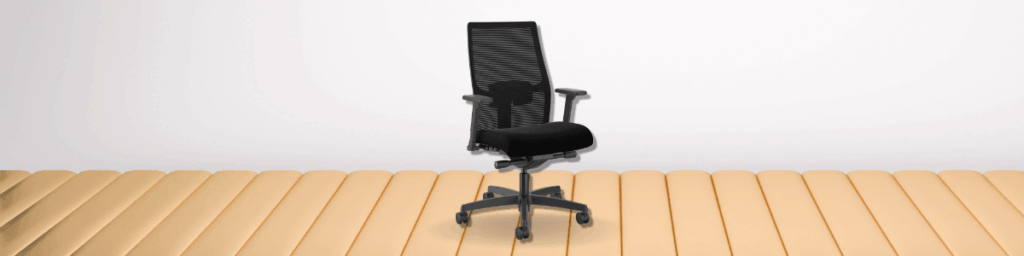
The BIFL Logic
The HON Ignition 2.0 earns its place in a BIFL guide by doing something unusual for a $504 chair: it uses an advanced synchro-tilt recline mechanism. This is the same mechanism class found in chairs costing two to three times as much. The synchro-tilt design moves the seat and back in a coordinated ratio — seat tilts at roughly half the rate of the back — which maintains proper thigh angle and reduces lumbar extension stress throughout the recline range. In practical terms, this means the mechanism experiences more even load distribution across its pivot points, which directly translates to a longer functional lifespan than a standard tilt mechanism under identical daily use.
The Spectrum mesh back is the second durability advantage. Mesh does not compress the way foam does. It maintains its tension and breathability over years, which is why high-end chairs migrated to mesh construction in the first place. The knife-edge contoured seat cushion — a specific cushion shape that reduces edge pressure on the underside of the thigh — is a comfort detail that also reduces the postural compensation that accelerates seat foam wear over time.
Performance Specs That Matter
Pneumatic seat height adjustment, height and width adjustable arms, and seat-slide capability provide the adjustment range needed to fit a wide variety of body types without compromise. The adjustable lumbar support is manual rather than passive — a step below the Amia’s LiveLumbar — but it is solid and holds its position reliably over time. The black frame version with advanced tilt at $504.26 is the configuration worth buying; the standard tilt variant sacrifices the mechanism advantage that makes this chair BIFL-eligible.
Specifically select the Advanced Synchro-Tilt variant of the Ignition 2.0. The standard tilt version is available at a similar price but drops the mechanism that justifies its BIFL score. The difference matters across 9,000 hours of use.
Strengths
- Advanced synchro-tilt at $504 — rare at this price
- Spectrum mesh back will not compress over time
- Limited lifetime warranty on structural components
- Seat-slide and 4-point arm adjustment
- Strong value-to-durability ratio in mid-market
Limitations
- Reinforced polymer base — not aluminum
- Manual lumbar, not passive or dynamic
- HON parts ecosystem less robust than Steelcase or HM
- Must select advanced tilt variant — standard tilt is a BIFL downgrade
The HON Ignition 2.0 advanced tilt is the most compelling mid-budget BIFL chair available in 2026. Its synchro-tilt mechanism punches significantly above its price class, its mesh back will outlast any foam alternative at this tier, and its limited lifetime structural warranty provides coverage that most $500 chairs cannot match. For buyers who will not or cannot spend above $600, this is the correct answer — and it is not a compromise pick. It is a genuinely good chair.
The BIFL Buying Guide: What the Spec Sheets Don’t Tell You
Every chair manufacturer writes its product listing to sell at first glance. Frame materials are described vaguely. Warranty language is optimistic. Mechanism names are proprietary. This section cuts through that and gives you the four things you actually need to understand before spending $400 to $1,700 on a chair you intend to sit in for the next fifteen years.
Herman Miller vs. Steelcase: How to Actually Choose
This is the comparison search that generates millions of queries every year, and most answers online are frustratingly vague. Here is the direct version. Both brands manufacture chairs at the highest structural tier available to consumers. Both offer 12-year warranty coverage with parts and labor. Both maintain active dealer networks for parts availability. The real differences are narrower than the internet suggests.
Herman Miller’s Embody prioritizes biomechanical precision — it was developed with physician input specifically to solve complex spinal support problems. If you have a diagnosed back condition, a history of disc issues, or significant postural asymmetry, the Embody’s BackFit adjustment and Pixelated Support system address those needs more directly than anything Steelcase currently offers. Steelcase’s Gesture prioritizes behavioral adaptability — it was built around how people actually move during a working day, with particular attention to multi-device use. If your work involves frequent posture shifts, multi-screen setups, or combined keyboard and touchscreen use, the Gesture’s 360-degree arm system delivers a structural advantage the Embody does not replicate. Neither brand is universally superior. The choice depends on whether your primary concern is spinal support precision or whole-body movement adaptability.
Mesh vs. Fabric vs. Foam: Which Ages Best
Mesh (HON Ignition 2.0, HON Sadie)
Maintains tension and breathability across years of use. Does not compress. Can sag if overstretched by consistent use outside weight rating. The most durable back material per decade for users within the specified weight range. Weak point: tension loss if the chair is regularly used well above its rated load.
Fabric over shell (Steelcase Gesture, Amia)
Polyester fabric over a rigid contoured shell maintains its support geometry indefinitely — the shell does the structural work, the fabric provides the interface. More durable than foam over time. Weaker point: fabric pilling and wear at contact zones after 8–10 years of heavy use. Replaceable through Steelcase’s parts program.
Pixelated polymer (Herman Miller Embody)
The most durable seat material in this guide. Polymer pixels return to position after compression — they do not take a permanent set the way foam does. Decade-plus durability without structural degradation. No equivalent in this price tier from any other manufacturer.
Standard foam (most budget chairs)
Compresses by 20–40% within 2–3 years of daily use. Once compressed, the original support geometry is gone permanently. This is the primary mechanical reason budget chairs fail ergonomically before they fail structurally. None of the chairs in this guide use standard foam as the primary seat material.
What “12-Year Warranty” Actually Covers — Brand by Brand
Warranty language is where manufacturers distinguish genuine commitment from marketing theater. These are the practical coverage realities for each brand in this guide, stripped of the legal hedging.
Herman Miller — 12-year full coverage
Covers all components including frame, mechanism, foam, fabric, cylinders, and casters. Labor for on-site repair is included through authorized service agents. The most comprehensive consumer chair warranty available. Applies to the Embody. The renewed Aeron’s 12+3 year Chairorama warranty is a separate commercial agreement — not backed by Herman Miller directly.
Steelcase — 12-year full coverage
Equivalent to Herman Miller’s coverage scope. Covers parts and labor for manufacturing defects across the full 12-year period. Applies to the Gesture (both variants) and the Amia. Steelcase’s authorized dealer network in the USA is particularly dense, which makes warranty claims and parts procurement faster in practice than the policy document alone suggests.
HON — Limited lifetime warranty
Covers the frame and mechanism for the lifetime of the original purchaser. Does not cover foam, fabric, cylinders, or casters beyond the standard defect period. Labor reimbursement varies by retailer. “Limited lifetime” means structural components only — plan to replace cylinders and casters out-of-pocket after year 8–10. Still a stronger coverage commitment than the 2-year warranties on budget chairs.
Chairorama (Aeron renewed)
12-year service warranty plus a separate 3-year mechanical replacement warranty. This is an aggressive coverage package for a refurbished product. The critical caveat: warranty claims go through Chairorama, not Herman Miller. Verify that the service warranty is in writing at point of purchase and confirm the claims process before committing.
Aluminum vs. Reinforced Nylon Bases: The Load-Cycling Reality
The five-star base of an office chair undergoes a specific type of structural stress that most buyers never consider: cyclical torsional loading. Every time you push back from the desk, pivot to reach a shelf, or roll the chair across a floor, the base experiences a combination of vertical load and lateral torsional stress at the joint between each arm and the central hub. Aluminum bases — used in Steelcase’s Gesture and Amia and specified in Herman Miller’s designs — tolerate this cyclical stress across decades without developing the micro-fractures that eventually cause nylon composite bases to fail at the joint interface. The failure mode for nylon bases under heavy cyclical loading is not dramatic — the base does not snap. It develops hairline cracks that gradually compromise lateral rigidity, creating a subtle instability that most users attribute to the cylinder rather than the base. By the time the instability is noticeable, the structural damage is significant. This is why the aluminum base specification matters and why it is prominently noted in every review above.
Is a Renewed or Refurbished Herman Miller Worth It in 2026?
The certified pre-owned office chair market has matured significantly since 2020. Where previously “refurbished” meant a wiped-down used chair with a new price tag, the better-credentialed refurbishers in 2026 — Chairorama, Crandall Office Furniture, Madison Seating, and a handful of others — now operate more like automotive certified pre-owned programs: documented inspection checklists, replaced consumables, structural assessments, and their own warranty backing.
The economics are compelling. A renewed Aeron at $670 versus a new Embody at $1,100 versus a new Gesture at $1,510 represents a $440–$840 spread for chairs occupying the same structural and ergonomic tier. If the refurbishment is documented and the seller is accountable, that spread is difficult to argue against on pure value grounds.
| What to ask before buying renewed | What a credible answer looks like | Red flag response |
|---|---|---|
| Which components were replaced? | Specific list: cylinder, casters, armpad foam, seat mesh if applicable | “The chair was fully refurbished” with no itemization |
| Was the frame inspected for stress fractures? | Yes, with a documented inspection protocol or certificate | No answer, or “the frame is in great condition” |
| How does the warranty claim process work? | Named contact, email address, documented procedure | “Contact us through Amazon” with no further detail |
| What generation is the Aeron? | A, B, or C generation specified — C is the current and most refined | No generation information provided |
| Is the warranty transferable? | Clear yes or no — non-transferable is acceptable but should be stated | No clarity on transferability |
The broader argument for renewed premium chairs is environmental as well as financial. A Herman Miller Aeron that gets a second 12-year service life through professional refurbishment represents a meaningfully better environmental outcome than manufacturing a new chair — even accounting for the refurbishment process itself. Steelcase’s Carbon Neutral certification on the Amia reflects the same philosophy from the manufacturing end. In 2026, the circular economy argument for premium chair refurbishment is no longer a fringe position — it is the logical extension of the BIFL philosophy itself.
The rule of thumb for renewed premium chairs: if the seller can tell you exactly what was replaced and stands behind the answer with a named warranty contact, buy with confidence. If the listing is vague and the seller reviews are mixed, add $430 and buy the Embody new. The premium is cheaper than the frustration.
Maintenance: How to Make Your BIFL Chair Last 20 Years
The gap between a premium chair that lasts 10 years and one that lasts 20 is almost entirely maintenance. These chairs are built to outlast decades of daily use — but only if the handful of wear components that are designed to be replaced actually get replaced on schedule. None of these tasks require professional service. All of them take under an hour and cost under $50.
Gas cylinder replacement
The pneumatic cylinder is the chair component most likely to fail before the frame — and the most overlooked maintenance item. Symptoms: the chair sinks slowly after you sit down, or no longer holds height at all. Universal replacement cylinders are available for $25–$50 and fit Steelcase, Herman Miller, and HON bases without modification. A cylinder change takes 15 minutes with a rubber mallet and a pipe wrench. Ignoring it does not just affect comfort — a failing cylinder changes your sitting height, which cascades into lumbar misalignment and monitor height problems.
Frequency: inspect annually, replace when sinking occurs — typically year 8–12
Caster cleaning and replacement
Office chair casters accumulate hair, dust, and debris in the wheel housing that creates rolling resistance — which in turn puts lateral stress on the base joints every time you push or roll. Pull each caster out quarterly (they are friction-fit in most designs) and clear the housing with a seam ripper or tweezers. Replace casters every 5–8 years or when rolling becomes uneven. Polyurethane casters ($15–$25 for a set of five) are significantly more durable than the standard nylon versions and protect hard floors better. Specify hard-floor or carpet variants correctly — using hard-floor casters on carpet accelerates caster wear dramatically.
Frequency: clean quarterly, replace every 5–8 years
Mesh back tension maintenance
Mesh backs — on the HON Ignition 2.0, HON Sadie, and Herman Miller Aeron — maintain their support properties through elastic tension in the woven material. Vacuuming with a soft brush attachment every two to three months removes the particulate buildup that abrades mesh fibers over time, accelerating tension loss. For stains, use a mild soap solution applied with a soft cloth — never scrub, which distorts the weave geometry. Avoid solvents, bleach, and high-pressure spray cleaning, all of which degrade the elastic properties of the mesh fiber. A well-maintained mesh back on a Herman Miller Aeron retains its original tension and support profile for 12–15 years.
Frequency: vacuum every 2–3 months, spot clean as needed
Recline mechanism lubrication
The tilt and recline mechanism is a metal-on-metal pivot system. Without periodic lubrication, the contact surfaces develop friction-driven wear that produces the clicking and grinding sounds that precede mechanism failure. Apply a silicone-based spray lubricant — not WD-40, which is a solvent and will accelerate wear — to the pivot points of the tilt mechanism annually. Access points vary by chair model but are typically visible under the seat pan. This single maintenance step is the most impactful thing you can do to extend mechanism lifespan beyond the warranty period. Steelcase mechanisms that have been lubricated annually have been documented functioning cleanly at 18–20 years of use.
Frequency: annually — silicone lubricant only, not petroleum-based
Fabric and armpad care
Polyester fabric seats and backs (Steelcase Gesture, Amia) develop surface wear at the contact zones — seat pan center, upper back contact area, and armpad surfaces — faster than anywhere else. Vacuum fabric surfaces monthly with a low-suction upholstery attachment. Armpad foam replacement is available through Steelcase and Herman Miller dealer networks and is the most common cosmetic repair on long-owned premium chairs. Armpad foam typically shows significant compression wear between years 6–10 depending on use intensity. Replacement cost is $30–$80 per set and restores the arm support geometry to original specification.
Frequency: vacuum monthly, inspect armpads annually, replace when compression is visible
The Right BIFL Chair for Every Lifestyle
Every chair in this guide will outlast anything under $300. The question is not whether to buy BIFL — the math on that is settled — but which BIFL chair matches your specific body, use case, and budget. Here is the direct answer for four distinct buyer profiles.
The power user
Steelcase Gesture
$1,510 / $100 per year
You sit 8 or more hours daily, use multiple screens, switch between keyboard and tablet, and take calls from the chair. The 360-degree arm system and full synchro-tilt mechanism were built specifically for your use pattern. This is the correct chair without qualification.
The back pain sufferer
Herman Miller Embody
$1,100 / $73 per year
You have a documented back history — disc issues, lumbar degeneration, postural asymmetry, or chronic lower back pain. The BackFit adjustment and Pixelated Support address the structural causes of seated back pain more precisely than any other chair in this guide. Physician-guided development is not a marketing claim here — it is the design methodology.
The back pain sufferer
HON Ignition 2.0 (Advanced Tilt)
$504 / $34 per year
You will not spend above $600 and you should not have to compromise into a disposable chair because of it. The Ignition 2.0’s advanced synchro-tilt mechanism, spectrum mesh back, and limited lifetime structural warranty make it genuinely BIFL-eligible — not a consolation pick. Specify the advanced tilt variant. The standard tilt is a different chair.
The larger-frame user
HON Sadie Big & Tall
$371 / $25 per year
You are between 200 and 350 lbs and every standard ergonomic chair — including premium ones — was not built for your frame. The Sadie was. Wider seat, taller back, denser cushion, reinforced cylinder, rated base. This is the only chair in this guide where the BIFL argument begins with structural engineering for your body, not adaptation from a standard-size platform.
The office chair market in 2026 has a specific problem: it is very good at making chairs look premium and very bad at building chairs that perform premium across a decade. Touch screens, lumbar massage functions, and app-connected seat sensors make compelling demo-room impressions. They also add electronic components with finite failure lives to what should be a purely mechanical product.
Every chair in this guide earns its BIFL designation the same way: aluminum or alloy steel structure, proven recline mechanisms, comprehensive warranty coverage, and a parts ecosystem that will still be operational in 2036. None of them have an app. None of them have a companion subscription. None of them will prompt you to update their firmware.
Buy the chair that fits your body and your use case. Maintain it on schedule. Expect it to still be holding your back when you are explaining to someone younger why you paid $1,500 for a chair fifteen years ago and it was the best financial decision you made for your home office.
Editorial note: All specifications sourced from manufacturer listings and Amazon product data as of April 2026. BIFL scores reflect editorial assessment of structural durability, warranty depth, parts availability, and historical ownership data. Prices subject to change. This guide is independently written and contains no paid placements.

